
Welsh Corgi Dog Information
The Welsh corgi is a small type of herding dog that originated in Wales. Two distinct breeds are recognized: the Pembroke Welsh corgi and the Cardigan Welsh corgi, with the Pembroke being the more common.
There are two breeds of Welsh corgis, the Cardigan and the Pembroke, each named for the county in Wales where it originated. The differences between the two breeds include bone structure, body length, and size. Cardigans are the larger of the two breeds, with large rounded ears and a 12-inch-long foxy, flowing tail set in line with the body. Though the Cardigan is allowed more colours than the Pembroke, white should not predominate in its coat. The Cardigan is a double-coated dog where the outer coat is dense, slightly harsh in texture, and of medium length. The dog’s undercoat is short, soft, and thick. The breed stands about 12 inches (30 cm) at the shoulder, and weighs about 30 pounds (14 kg). The Cardigan is sturdy, mobile, alert, active, intelligent, steady, and neither shy nor aggressive.
Pembrokes feature pointed ears, and are somewhat smaller in stature than the Cardigan. Considered a practical dog, they are low-set, intelligent, strong and sturdy with stamina sufficient to work a day on the farm. The dog’s head is fox-like and the tail short, which can be accomplished through breeding or docking. Historically, the Pembroke was a breed with a natural bob tail (a very short tail), and today, if the Pembroke has a tail at all, it is usually curly. Due to the advent of tail docking in dogs, the bob tail was not aggressively pursued, with breeders focusing instead on other characteristics, and the tail artificially shortened if need be. Given that some countries now ban docking, breeders are again attempting to select dogs with the genes for natural bob tails. Pembrokes stand from 10 inches (25 cm) to 12 inches (30 cm), and weigh approximately 28 pounds (13 kg).
Corgis are herding dogs, and perform their duties by nipping at the heels; the dog’s low height allows it to avoid being kicked in the process. As herding dogs, corgis work livestock differently than other breeds. Instead of gathering the cattle the way a collie would, by running around the livestock, corgis drive the herd forward by nipping at their heels and working them from behind in semicircles. Seldom giving ground, if an animal should turn and charge, the corgi will bite its nose, causing it to turn and rejoin the herd. Although they specialize in herding cattle, corgis are also used to herd sheep and Welsh ponies. They are also one of the few breeds able to herd geese.
Welsh corgis also guarded children and were pets.
The corgi’s origin is difficult to trace. There is mention in an 11th-century manuscript of a Welsh cattle dog, though there is no evidence about whether this is the corgi or an ancestor.
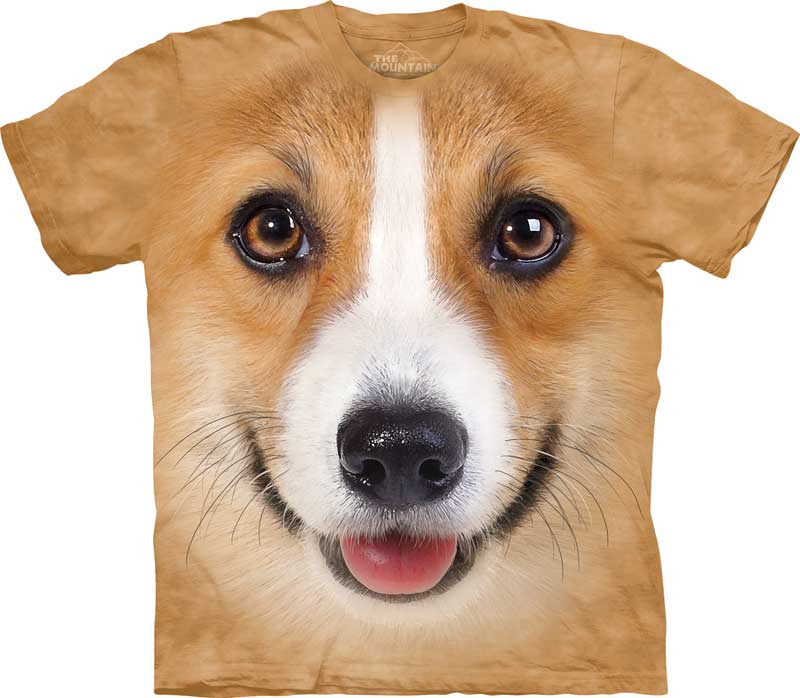
Welsh folklore says the corgi is the preferred mount of tiny, woodland fairy warriors. There is also a folk legend that says corgis were a gift from the woodland fairies, and that the breed’s markings were left on its coat by fairy harnesses and saddles. Corgis often have a marking, a white stripe, that runs from the nose, through the eyes, and up into the forehead; this marking is referred to as their blaze.
The first recorded date for corgis appearing in the show ring in Wales is 1925. The first show corgis were straight off the farm and gained only moderate attention. Subsequent breeding efforts to improve upon the dog’s good looks were rewarded with increased popularity. For years the two breeds, the Cardigan Welsh corgi and the Pembroke Welsh corgi, were shown as two varieties of a single breed. Since the two Corgi breeds developed in the Welsh hill country, in areas only a few miles apart, there is evidence of crossbreeding between the two that accounts for the similarities.
The Cardigan is one of the oldest breeds of dog in Britain and has been employed for centuries by Welsh farmers to herd cattle, herding the owner’s livestock to grazing areas and driving the neighbour’s cattle out of gardens and open pastures. In early settlements these dogs were prized family members, helping hunt game and guarding children. The Pembroke is believed to have been introduced to Wales by Flemish weavers about 1100, though 920 is also a suggested date. Another possibility for this corgi’s origin is breeding between Cardigans and the Swedish Vallhund, a spitz-type dog resembling the Pembroke and brought to Wales by Norse invaders.
In 1933 the first Welsh Corgis were brought to the United States by American breeder Mrs. Lewis Roesler, for her Merriedip Kennels in the Berkshire Hills of Massachusetts. She Purchased a Pembroke bitch, Little Madam, at London’s Paddington Station for twelve pounds at the time followed by a mate named, Captain William Lewis. The breed received recognition in America in 1934 with Mrs. Roesler’s dogs being the first recorded Pembroke Corgis in America.
There has recently been a concern regarding the population size of the Welsh Corgi. Currently the Corgi is on Britain Kennel Club’s watch list. In 2013, only 241 Welsh Corgis were registered. In order to stay off the breed vulnerable list 300 corgis would need to be registered, this is not expected.
Leave A Comment
You must be logged in to post a comment.