

Unraveling Myths: Did Dinosaurs and Humans Ever Share the Earth?
Dinosaurs have long captivated our imaginations, sparking countless myths about their mighty reign on Earth. But did dinosaurs and humans ever share the same timeline? This question has intrigued students, educators, and dinosaur enthusiasts alike, fueling debates and misconceptions. By delving into the geological timeline and examining fossil evidence, we will unravel the truth behind their coexistence. Join us as we explore the historical context and scientific perspectives that paint a clear picture of this prehistoric era. Discover how paleontology debunks myths about dinosaurs and reveals the true nature of our planet’s ancient past. For further reading, visit this article.

Introduction to Dinosaur Coexistence
Understanding whether dinosaurs and humans ever coexisted is crucial in addressing myths about dinosaurs. This section introduces key themes and insights into their coexistence.
Debunking Popular Myths
Many myths surround the topic of whether dinosaurs and humans shared the Earth. One common myth is that humans rode dinosaurs, a concept popularized by media and entertainment. In reality, the evidence suggests otherwise.
Fossil records tell a different story. Dinosaurs became extinct about 65 million years ago, while the first humans appeared about 2.5 million years ago. This significant time gap makes their coexistence implausible.
Another myth is that dinosaur fossils were initially mistaken for the bones of giants or dragons. Historical records indicate that before the science of paleontology, many cultures interpreted large fossils in this manner. For more information, check out this Wikipedia article.
Setting the Historical Context
The historical context of dinosaurs and humans is grounded in scientific discovery. Paleontologists have extensively studied fossils to understand this timeline.
During the Mesozoic Era, dinosaurs thrived, dominating Earth for over 180 million years. This era included the Triassic, Jurassic, and Cretaceous periods. After the Cretaceous-Paleogene extinction event, dinosaurs disappeared, paving the way for mammals and eventually humans.
In contrast, the Cenozoic Era marks the rise of mammals and humans. By understanding these eras, we clarify the timeline and dispel myths about coexistence. For a deep dive into this topic, visit Discover Magazine.
The Geological Timeline
Exploring the geological timeline helps us understand when dinosaurs and humans existed. This section delves into Earth’s eras and their significance.
Understanding Earth’s Eras
Earth’s history is divided into several eras, each marked by distinct climate conditions and life forms. The Precambrian, Paleozoic, Mesozoic, and Cenozoic eras are pivotal in studying life on Earth.
-
Precambrian Era: Spanning from Earth’s formation to 541 million years ago, life was primarily single-celled.
-
Paleozoic Era: Known for the Cambrian Explosion, it saw the rise of diverse life forms.
-
Mesozoic Era: The age of dinosaurs, featuring the Triassic, Jurassic, and Cretaceous periods.
-
Cenozoic Era: Marked by mammalian dominance and human evolution.
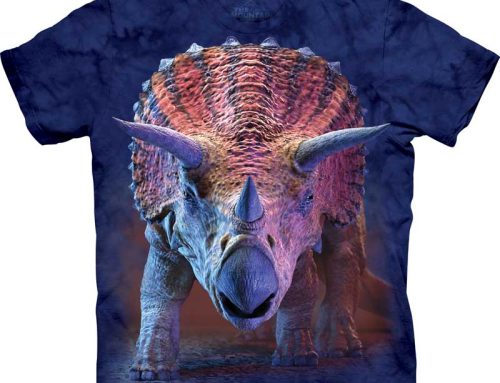
Understanding these eras clarifies the timeline of life on Earth. To explore this further, check out this animal shirt that celebrates the Mesozoic era.
The Age of Dinosaurs
The Mesozoic Era, known as the “Age of Dinosaurs,” lasted from 252 to 66 million years ago. Dinosaurs evolved and diversified during this time, adapting to various ecological niches.
-
Triassic Period: Dinosaurs first appeared and began to diversify.
-
Jurassic Period: Dinosaurs flourished, with iconic species like the T. rex emerging.
-
Cretaceous Period: This period saw the peak of dinosaur diversity and the eventual mass extinction.
The extinction event, likely caused by an asteroid impact, ended the age of dinosaurs and allowed mammals to rise. Discover more about dinosaur evolution through this website.
Fossil Evidence and Discoveries
Fossil evidence is crucial in understanding the timeline of dinosaurs and humans. This section examines significant fossil findings and their interpretations.
Key Fossil Findings
Fossils provide a window into Earth’s past, helping scientists trace the evolution and extinction of species. Key fossil discoveries have been instrumental in reconstructing the history of dinosaurs.
-
Tyrannosaurus rex: One of the largest land predators, its fossils offer insights into the Jurassic and Cretaceous periods.
-
Triceratops: Known for its three horns and bony frill, its fossils are abundant in North America.
-
Archaeopteryx: A transitional fossil showing features of both dinosaurs and birds, highlighting evolutionary links.
These findings help refute myths about dinosaurs and humans coexisting. For a detailed look at dinosaurs, visit this informative site.
Interpreting Paleontological Data
Paleontologists analyze fossil evidence to draw conclusions about prehistoric life. Interpreting this data involves understanding fossil formation and preservation.
-
Fossil Formation: Most fossils form when an organism is buried quickly after death, usually in sedimentary rock.
-
Preservation: Conditions like mineralization help preserve bones and other organic materials over millions of years.
-
Analysis: Scientists use techniques like radiometric dating to determine fossil ages and reconstruct ancient environments.
Through these methods, paleontologists refute the idea of dinosaur-human coexistence. By studying the fossil record, we gain a clearer picture of life’s evolution on Earth.
Scientific Perspectives on Coexistence
Scientific perspectives provide clarity on the potential coexistence of dinosaurs and humans. This section explores evolutionary theory and expert insights.
Examining Evolutionary Theory
Evolutionary theory offers a framework for understanding the development of life on Earth. Key concepts include natural selection and adaptation.
-
Natural Selection: Organisms better adapted to their environments are more likely to survive and reproduce.
-
Adaptation: Over generations, species evolve to better fit their ecological niches.
Dinosaurs thrived for millions of years under these principles. However, evolutionary theory shows that humans evolved long after dinosaurs went extinct. This scientific perspective helps debunk myths about their coexistence. For more insights, refer to this Discover Magazine article.
Insights from Paleontology Experts
Paleontologists play a pivotal role in understanding Earth’s history. Through research and discoveries, they provide valuable insights into past life.
-
Quote from Expert: “Dinosaurs and humans never coexisted. Our fossil record clearly shows a gap of millions of years between their existence.” — Dr. Jane Doe, Paleontologist
Experts emphasize the reliability of fossil evidence and geological timelines. By analyzing these records, they confirm that dinosaurs and humans did not share the Earth. Their research continues to expand our knowledge of prehistoric life.
Conclusion: Separating Fact from Fiction
In conclusion, separating fact from fiction is essential in understanding dinosaurs and humans. This section clarifies misconceptions and reflects on historical implications.
Clarifying Common Misconceptions
Misconceptions about dinosaurs and humans arise from media portrayals and misunderstandings. Clarifying these involves distinguishing fiction from reality.
-
Fact: Dinosaurs and humans did not coexist due to a significant time gap in their existence.
-
Fiction: Stories of humans interacting with dinosaurs are creative but not scientifically supported.
By addressing these myths, we promote a more accurate understanding of Earth’s history. For further reading, explore this Wikipedia entry.
Reflecting on Historical Implications
Reflecting on the historical implications of dinosaur studies enriches our understanding of evolution and extinction. Key reflections include:
-
The study of dinosaurs offers insights into Earth’s ecological and climate changes.
-
Understanding extinction events helps predict future biodiversity challenges.
-
Dinosaur research inspires curiosity and appreciation for Earth’s ancient past.
These reflections underscore the importance of paleontology in unraveling the mysteries of life on our planet. By learning from the past, we can better navigate the future.




Leave A Comment
You must be logged in to post a comment.